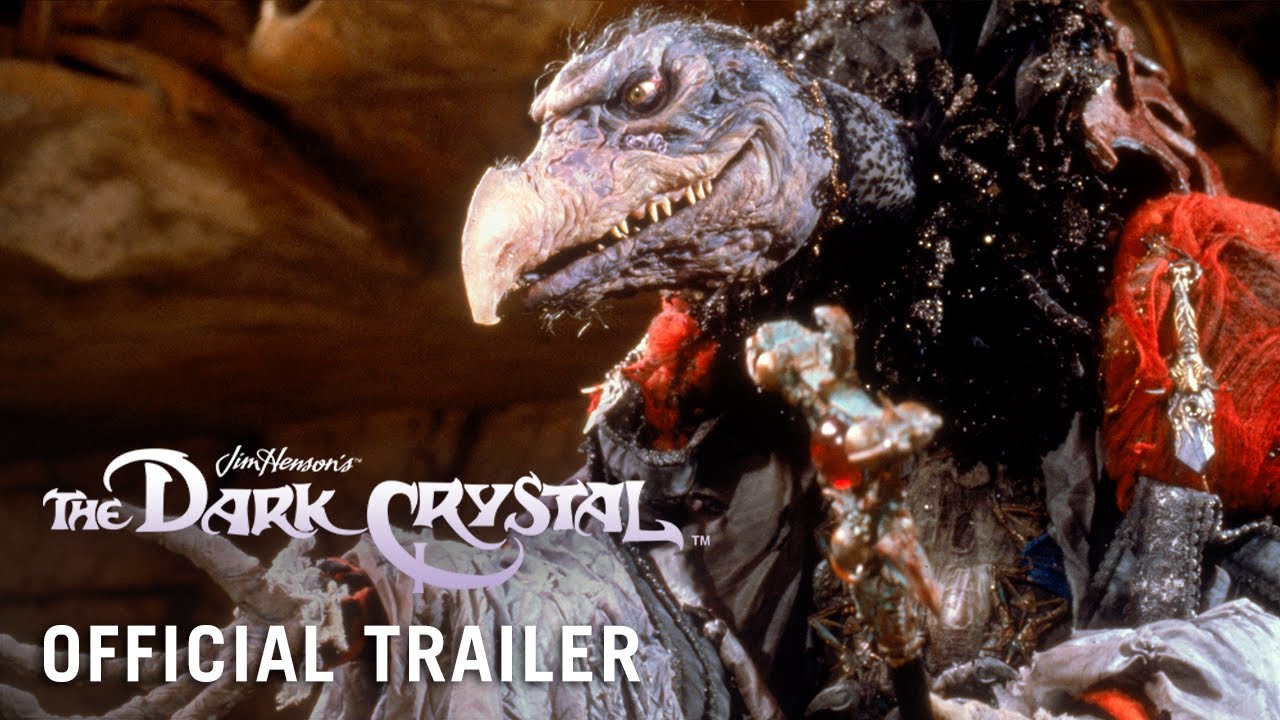
Released in 1982, The Dark Crystal is a fantasy film directed by Jim Henson and Frank Oz. Best known for his work on The Muppets, Henson made a bold creative departure with this project, aiming to construct a darker, more mature fantasy experience. What at once stands out is how fully committed the film is to that vision—it never tries to soften its tone or reassure its audience.
Unlike most fantasy films, The Dark Crystal features no human actors. Every character is brought to life through puppetry, making the film an ambitious technical and artistic experiment. When I first watched it, I found the atmosphere unsettling in a way that felt deliberate rather than accidental. Over time, that discomfort has become one of the film’s defining strengths.
World Building & Visual Design
The world of Thra feels ancient and fully realized, as if the story we are shown is only one chapter in a much larger, partially obscured history. Rather than relying on exposition, the film communicates its mythology through environments, rituals, and visual symbolism. The viewer is encouraged to see rather than be told, and the film consistently rewards careful attention to background details.
Visually, The Dark Crystal uses contrast to reinforce its central themes. Soft, organic shapes are placed alongside sharp, decaying designs, reflecting ideas of decay, imbalance, and mortality. This approach makes the world feel cohesive and immersive, proving how strong visual design can carry narrative weight without reliance on excessive dialogue.
Characters & Creature Effects
Because The Dark Crystal relies entirely on puppetry, character design and movement are essential—and this is where the film excels. Each race is immediately identifiable through posture, shape language, and motion alone. The contrast between the calm, rounded Mystics and the jagged, grotesque Skeksis communicates their opposing philosophies before they even speak.
The Skeksis are the film’s most striking figures. They are disturbing and often uncomfortable to watch, with exaggerated physical decay and warped proportions that emphasize corruption and fear of death. Rather than functioning as generic villains, they are expressly flawed—defined by obsession, imbalance, and a desperate desire for control. The protagonist’s comparatively quiet journey allows these themes to remain central, avoiding reliance on traditional action-driven heroics.
Narrative Style & Tone
The pacing of The Dark Crystal is slow and deliberate. On first viewing, this can feel unusual when compared to modern fantasy films, but it lends the story a mythic, fable-like quality. The narrative unfolds visually, trusting the audience to form connections without constant explanation.
The tone is unapologetically dark, engaging with themes of decay, imbalance, and mortality. The film never treats these themes lightly or ironically. Instead, it takes its audience seriously and demands patience and attentiveness in return, which allows it to feel timeless rather than dated.
Soundtrack & Atmosphere
Trevor Jones’ musical score enhances the film’s atmosphere without overwhelming it. The music prioritizes mood and mystery, often allowing silence to heighten tension and emotional weight. Combined with detailed sets and practical creature effects, the atmosphere feels tangible and grounded.
In an era increasingly dominated by digital effects, The Dark Crystal stands out for its physical craftsmanship. Knowing that every expression and movement needed multiple puppeteers underscores the extraordinary level of artistry involved. The film has a tactile quality that many CGI-heavy productions struggle to replicate.
Critical Perspective
Critical response to The Dark Crystal has evolved significantly since its release. While its dark tone initially divided audiences, critics have consistently praised its ambition and craftsmanship. In its original 1982 review, Variety described the film as “a dazzling technological and artistic achievement by a band of talented artists and performers,” highlighting the remarkable skill required to bring its world and characters to life.
I agree with this assessment. Even if the film’s pacing or tone does not resonate with every viewer, its technical and artistic achievements are impossible to ignore. The puppetry, set design, and practical effects work together to create a fantasy world that feels cohesive and tangible. Although the film challenged expectations for a Jim Henson project at the time, that same boldness has allowed it to endure as a cult classic rather than fade into obscurity.
Final Thoughts & Rating
The Dark Crystal is not a film designed to appeal to everyone, and that is its greatest strength. Its slow pacing, minimal dialogue, and unsettling tone may alienate some viewers, but these choices are fundamental to its identity. What makes the film stand out is its unwavering commitment to vision—it embraces darkness, strangeness, and ambiguity without compromise.
Rating: 🔮🔮🔮🔮✨ (4.5 out of 5 Crystal Shards)
Written by Devin Lampier, Lethbridge Polytechnic