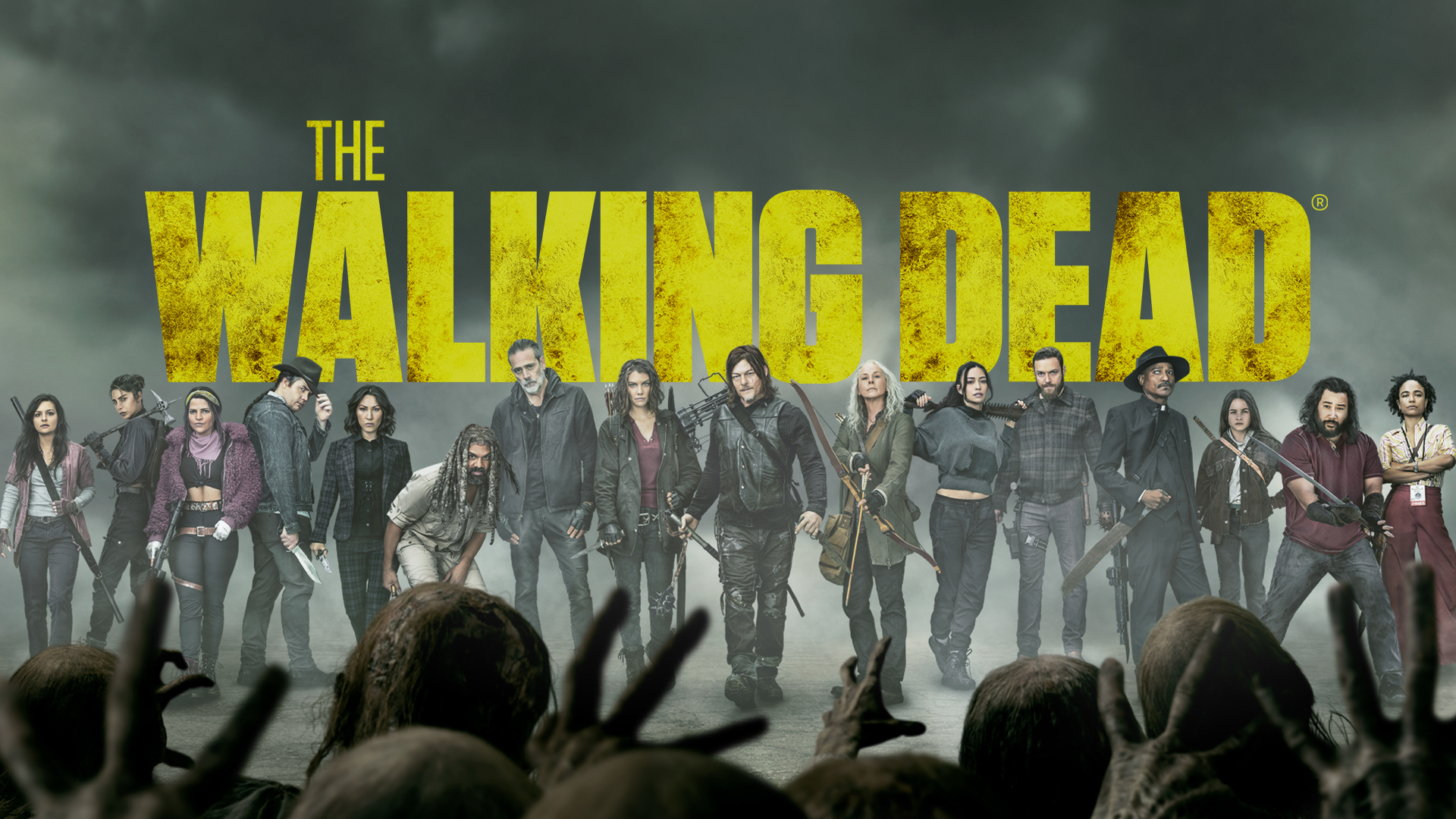
When “The Walking Dead” debuted on AMC in 2010, no one could have guessed that it would develop into an eleven-season cultural phenomenon. Based on Robert Kirkman’s comic novel series, this post-apocalyptic horror employs the zombie genre to examine much more unsettling topics, such as how individuals evolve as society disintegrates. The program, which was developed by Frank Darabont and produced by AMC Studios, centers on a group of survivors who are battling for their lives in a world where “walkers” reign, as well as former sheriff’s deputy Rick Grimes (Andrew Lincoln).
Character Development & Evolution
The Walking Dead’s commitment to character development is its best feature. Rick Grimes initially presents himself as a moral leader who ardently defends the value of the past. But over time, he becomes a harsher, more realistic, and frequently violent person. The program’s central thesis, that we must make sacrifices that fundamentally change who we are in order to survive, is best illustrated by his shift from saying that “we don’t kill the living” to thinking about truly evil deeds.
The people involved in the show are very different. That’s why this is so interesting. Daryl Dixon, portrayed by Norman Reedus, is a southern-born rough guy from the outside. During the series, he becomes the best character because we get to know him really well. He went from being rude and not trusting anyone to being the person on whom the group can always count on. Michonne is played by Danai Gurira and is a combatant with a katana. Carol Peletier’s (Melissa McBride) evolution from a mistreated homemaker to a merciless survivor may be the most remarkable development of the character in the series.
The show excels when it takes pauses for subtle character interactions such as discussions by campfires, moral dilemmas, and relationship dynamics that root the horror in relatable human experiences.
Cinematography & Visual Design
“The Walking Dead” excels at creating a believable apocalypse. The individuals responsible for making the show visually appealing, like cinematographer David Boyd, portray it in a manner that illustrates how everything disintegrates such as vacant streets or vegetation sprouting in communities and ancient structures deteriorating. The series is recorded in Georgia. This gives it a more authentic vibe than if it were shot in a studio.
The practical effects and makeup work warrant exceptional acknowledgement. Greg Nicotero’s KNB EFX Group designed walkers that consistently remain unsettlingly effective throughout the series. Instead of depending on CGI zombies, the series used practical makeup that adds substance and impact to the undead dangers.
The production design team drafted unique visual representations for every setting the group meets: the suffocating prison of Season 3, the deceptive haven of Terminus, and the fortified community of Alexandria.
Narrative Structure & Pacing
This is the point at which the reputation of “The Walking Dead” becomes intricate. The performance follows a rhythm of continuous motion succeeded by prolonged stillness, forming an episodic framework that is highly effective when done right but becomes monotonous when it stumbles. The initial season’s six-episode storyline sustained impressive suspense and progression. Seasons 3 and 4 achieved a successful equilibrium, garnering the series with its utmost critical acclaim.
Critic Ken Tucker from Entertainment Weekly noted in Season 2 that the series occasionally turned into “a nighttime soap” lacking direction, a critique that would reappear during the show’s entirety. The most significant pacing problems arose when it extended weak storylines over an excessive number of episodes. Seasons 7 and 8, focused on the struggle against Negan (Jeffery Dean Morgan), which became a narrative that challenged even loyal viewers’ endurance.
However, when the ambition of the storyline aligned with its pacing, it resulted in television that was genuinely thrilling. The bottle episodes demonstrated the power of focused storytelling. The series consistently distinguished itself with captivating season premieres and finales, delivering astonishing moments that ignited substantial cultural conversations.
Sound Design & Musical Score
The main horror theme is a melancholic and eerie song by Bear McCreary that perfectly captures the atmosphere of “The Walking Dead”. The show’s music is perfect for mixing tension and sadness, illustrating the despair of the world after the apocalypse, using only a few instruments.
In the series, the sound design acts as a character itself. The program frequently utilizes silence to lethal impact, allowing the noises of distant pedestrians moaning or the wind whistling through empty homes to instill a feeling of terror. When violence erupts, the audio composition confronts the harsh, raw reality of combat with both the living and the deceased.
Acoustic instruments and simple arrangements are frequently used in emotional times. The energy of action scenes is fueled by powerful, percussion-heavy compositions. The program also deliberately uses popular music during season finales, a successful strategy taken straight from Tarantino’s playbook.
Final Verdict
“The Walking Dead” is a collection of dreams and inconsistent implementations. At best, especially in the first, third, fourth, and fifth seasons, it created a horror drama that had emotional impact, fear and provoking thought. The program raises important questions about leadership, morality, and what we are willing to give up to live. However, in the middle of the series, particularly in the seventh and eighth seasons, quality declined considerably. The patience of viewers was subjected to stress due to pacing problems, repetitive plots, and shock value without emotional reward.
The potential audience should come to “The Walking Dead” with quite reasonable expectations. Those interested in horror or post-apocalyptic literature should water the first four to five seasons. The series’ cultural influence has initiated a renaissance of zombie media, produced popular spin-offs, and proved that cable television can compete with high-quality networks. Despite its shortcomings, “The Walking Dead” successfully reaches its main objective, which is to clearly prove that the true monster is not a dead body, but a living person making terrible decisions. It offers a unique television experience, at best one of the most fascinating horror dramas ever produced. Even if it was unable to sustain its early brilliance throughout the course of its long run, this groundbreaking series transformed television horror.
Written by Aster Harris, Lethbridge Polytechnic