Star Wars has never exactly been casual.
This is a franchise where people can identify a background alien by name, argue about lightsaber forms, explain trade route politics with a straight face, and still remember which astromech rolled past a moisture vaporator for two seconds.
That is not a complaint. That is the point.
Star Wars rewards the enthusiast: the person who wants the timeline, the weird side character, the vehicle cross-section, and the explanation for why an Imperial hallway looks like it was designed by three exhausted engineers and one wizard.
It is exactly the kind of thing that brings out the inner dork, and Star Wars games may be the purest version of that energy.
The movies made Star Wars iconic. The games made it playable, personal, mechanical, and wonderfully nerdy.
They let players dig into pilots, smugglers, soldiers, bounty hunters, ancient Sith, forgotten planets, and lore that makes normal people leave the room.
In other words, the good stuff.
Star Wars Games Made Obsession Playable
The earliest Star Wars arcade games understood something simple: people did not only want to watch the Death Star trench run. They wanted to try it themselves and probably crash several times before pretending the machine was rigged.
Atari’s 1983 Star Wars arcade game gave players a flight yoke, a glowing vector trench, incoming TIE fighters, and the chance to feel like their hands actually mattered in the galaxy.
Watching Star Wars makes you care about the myth. Playing Star Wars makes you responsible for it.
X-Wing and TIE Fighter later took that idea and made it much nerdier, which is meant as the highest compliment. Being a pilot was not just looking cool in an orange jumpsuit. You had to manage shields, divert power, identify targets, follow mission objectives, and discover that the Empire apparently had paperwork even in space combat.
TIE Fighter remains one of the great dork achievements in Star Wars gaming because it trusted players to enjoy the procedure. It made you part of the Imperial machine. Not Vader. Not Palpatine. Just a pilot trying to survive the mission and maybe not think too hard about your employer.
That is what Star Wars games do beautifully. They make the galaxy feel like a place with systems, rules, jobs, and consequences.
The Best Star Wars Games Give You a Role
The movies often follow destiny.
The games are better when they give you a job.
Dark Forces did not begin by handing you a lightsaber and declaring you the center of the universe. It gave you Kyle Katarn, a blaster, a mission, and Imperial facilities apparently designed by people violently opposed to handrails.
Kyle worked because he came from the margins. He was not Luke. He was not Han. He was a mercenary dragged through detention centers, weapons labs, sewer systems, and the Dark Trooper project.
Then Jedi Knight pushed him toward the Force, but the journey mattered because he did not start there. Shooter before myth. Mercenary before Jedi. That messiness gave him texture.
Republic Commando understood the same trick. The fantasy was not “be the chosen one.” It was “be the professional.” You were part of Delta Squad, clearing rooms, issuing orders, trusting teammates, and experiencing the Clone Wars from ground level.
Battlefront did it on a larger scale. Hoth stopped being a sequence and became terrain. Endor became chaos. Naboo became a place where someone, somewhere, was definitely about to get sniped by a droid with no emotional investment in the lore.
That is where Star Wars games shine. They turn setting into participation.
KOTOR Turned Lore Into Identity
Knights of the Old Republic may be the most important Star Wars game ever made because it did not just let players visit the galaxy. It allowed them to define themselves inside it.
KOTOR moved far away from the films and proved Star Wars could survive without leaning on the same familiar faces forever. Ancient Jedi. Ancient Sith. Mandalorian wars. Moral choices. Party members. Betrayal. Very serious robes.
It gave players permission to care deeply about a version of Star Wars history casual viewers had never heard of.
You were not replaying the films. You were stepping into another legend.
That is why people still argue about Revan like the character owes them money.
The Old Republic era became one of those corners of Star Wars that fans did not just remember. They moved into it. SWTOR kept that space alive for years with class stories, companions, flashpoints, expansions, fashion choices, and enough lightsaber drama to power several small moons.
For some players, that is their Star Wars.
Not because they dislike the films. Because the games gave them their own door into the galaxy.
The Weird Games Matter Too
The old idea that games are just side content has aged about as well as a stormtrooper’s aim.
Games are now part of the main pop culture bloodstream. They become shows, films, anime, merch lines, memes, cosplay, and entire personality structures. That is why pieces about video games adapted into anime do not feel like niche crossover trivia anymore. They feel like modern fandom doing what modern fandom does.
Star Wars games were doing that early. They expanded the galaxy in ways the films could not. They invented heroes, eras, vehicles, factions, villains, and arguments.
That is one reason the weird games count.
Rebel Assault is a CD-ROM time capsule from an era when everyone thought games were about to become movies and that this would definitely not lead to awkward controls. Shadows of the Empire is several different games wearing one jacket. Masters of Teräs Käsi remains a fighting game so odd that even mentioning it feels like opening a cursed holocron.
Not all of them are great. Some are clunky, dated, awkward, and still important to the people who played them at exactly the right age. Anyone who has loved an old game understands the strange emotional math where nostalgia can outweigh outdated graphics.
Yoda Stories is not elegant. Star Wars: Demolition is not sitting beside The Empire Strikes Back in the sacred vault of franchise perfection.
But they are part of the galaxy’s playable history.
That is why keeping track of all Star Wars games ever made becomes more than a checklist. It is proof that Star Wars gaming history is not a straight line of classics. It is a messy archive of risks, cash-ins, fan favorites, technical miracles, and extremely questionable ideas.
Very dorky.
Very Star Wars.
Modern Star Wars Still Needs That Energy
The modern games work best when they remember that dork energy.
Jedi: Fallen Order and Jedi: Survivor succeed because Cal Kestis is not simply a power fantasy with better hair. His story is intimate. He is damaged, hunted, lonely, stubborn, and still trying to figure out what being a Jedi means after the institution that defined him was destroyed.
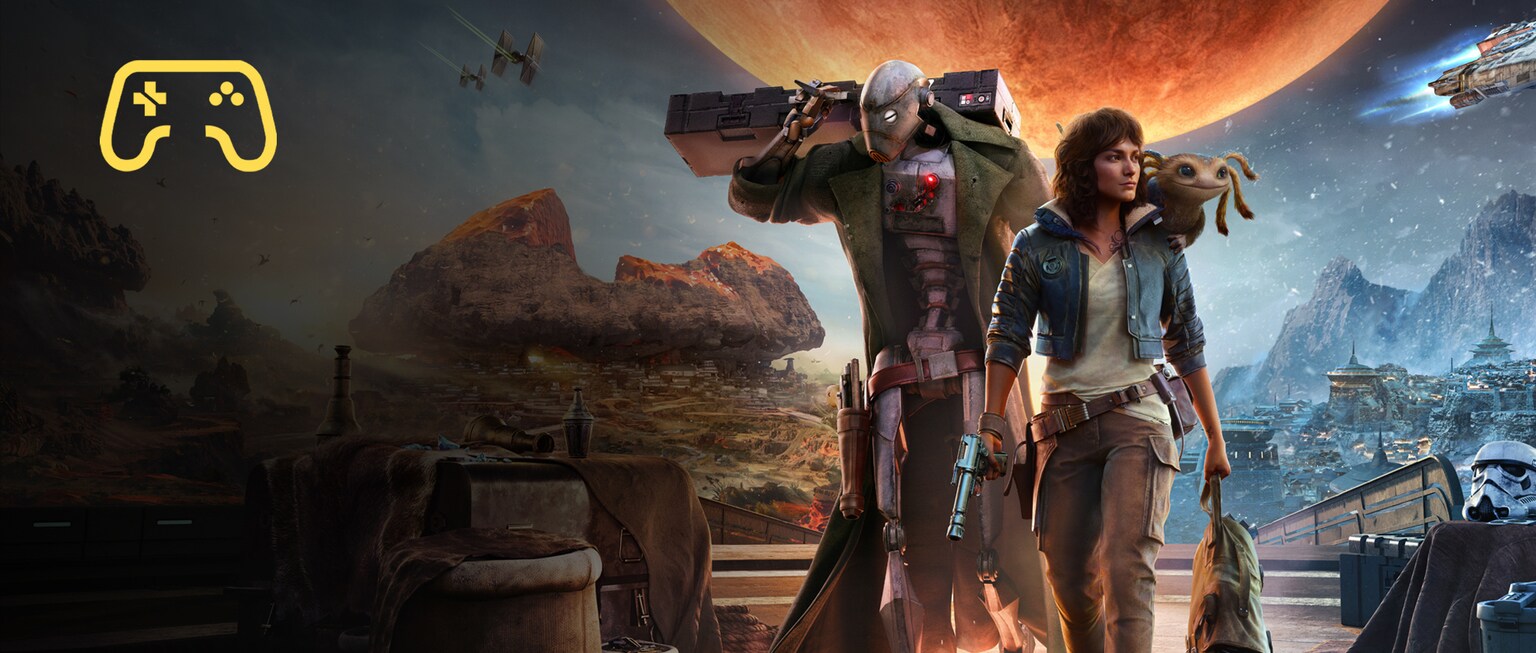
Star Wars Outlaws moves in another direction by leaning into scoundrel energy. Kay Vess is not trying to save the galaxy in the grand mythic sense. She is trying to survive it. Star Wars should have room for people who are not chosen, crowned, cloned, prophesied, or secretly related to someone important.
The games also keep older Star Wars alive through remasters, mods, fan patches, private servers, community projects, and players who refuse to let a beloved game disappear just because the industry has moved on.
There is a reason something like Sekiro: No Defeat feels like a natural modern headline rather than a strange exception. Games are worlds now. They do not stay in one format, one box, or one audience lane. When a game has enough identity, people keep returning to it in new forms.
Star Wars games have had that pull for decades.
The Galaxy Is Better When It Gets Nerdy
Star Wars games are not side content.
They are one of the main ways people have learned to live inside the galaxy.
The films gave us the myth. The shows expanded the timeline. The books and comics filled the shelves. But the games gave fans control, identity, failure, repetition, mastery, and the strange joy of realizing your favorite Star Wars experience might involve shield management, dialogue choices, squad commands, or crashing a podracer into the same wall for the ninth time.
Star Wars games let the franchise be playful, mechanical, experimental, personal, and deeply nerdy. They let us be pilots, Jedi, Sith, commandos, smugglers, bounty hunters, soldiers, crafters, cantina weirdos, and occasionally people who spend way too much time choosing robes.
The movies made us fans.
The games made us participants.
And for a franchise built on imagination, obsession, and the eternal belief that every background alien probably has a name and tragic backstory, that may be the most Star Wars thing of all.