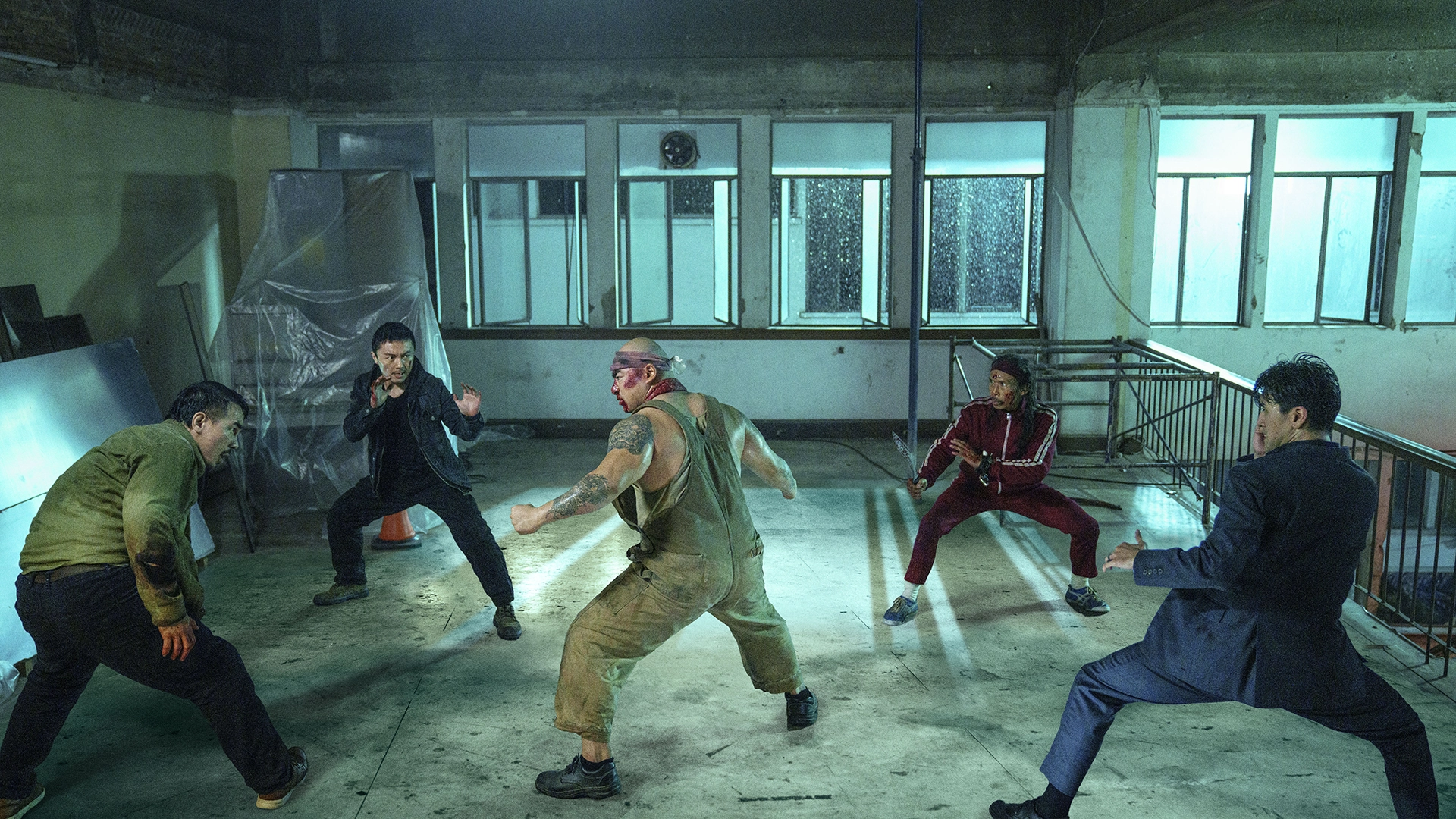
At a time when large-scale martial arts films have become increasingly rare in theaters, The Furious aims to bring the genre back to audiences through an international collaboration of filmmakers and performers from across Asia. Legendary action choreographer Kenji Tanigaki (Rurouni Kenshin, Rurouni Kenshin: Kyoto Inferno, Rurouni Kenshin: The Legend Ends, Rurouni Kenshin: The Final, Snake Eyes: G.I. Joe Origins) returns as a director for the action thriller film.
The Furious is set in Thailand and follows Wang Wei (Xie Miao) after his daughter is kidnapped and he receives no help from the authorities. He finds an ally in Navin (Joe Taslim) who is a journalist also looking for his wife who disappeared after looking into a criminal network involved with missing kids.
Leading up to the film’s release, Dorkaholics spoke with Tanigaki as well as action director Kensuke Sonomura, producer Bill Kong, and stars in the film including Xie Miao, Joe Taslim, Brian Le, and Joey Iwanaga.
“I think for the past 10 years, I haven’t done much of that… and that’s why nowadays… I think that the world needs more of this kind of movie,” Bill Kong said.
For producer Bill Kong, The Furious represents more than another action film. It’s an effort to revive the large-scale martial arts cinema that helped define Hong Kong filmmaking for decades.
“I’m a huge fan of Hong Kong-style martial arts movies, and I felt audiences haven’t had enough opportunities like this on a big scale in recent years,” Kong shared. “We wanted to make the best martial arts movie possible and bring that experience back to audiences.”
At the heart of this film is family, a theme that is repeatedly discussed by the stars of the film as a motivating factor for the characters and the conflicts that ensue. Family, or the lack of it, also plays a role in shaping one of the film’s antagonists.
According to Iwanaga, Paklung’s actions are rooted in a lack of unconditional love and family support.
“For Paklung, he grew up, he didn’t really know the unconditional love of family. He was never really raised in a loving family,” Iwanaga said.
Taslim viewed Navin as a fundamentally good man consumed by guilt and regret over his wife’s disappearance.
“If it’s the purpose for me to win, the purpose for me to survive… every fight scene for me is this different purpose,” Joe Taslim shared about his character.
Martial arts is also a centerpiece of the film and is a tool for character development, as each character’s fighting style reveals personalities, motivations, and emotional states. This is especially highlighted in Wang Wei, played by Xie Miao.
“Because I think when someone cannot express themselves with language to express anger, the anger the body expresses might be stronger,” Miao said.
Tanigaki intentionally paired performers with different martial arts backgrounds to create contrasting characters and fighting styles.
“We tried to focus on a little off balance so it looks more real and raw,” Sonomura explained.
Beyond showcasing different fighting styles, action director Kensuke Sonomura worked to incorporate each performer’s martial arts background into the choreography.
Rather than creating competing styles, the film’s diverse cast allowed the filmmakers to build action sequences that feel distinct and authentic to each character.
“Everybody has their own rhythm and individuals are different,” Sonomura said. “When you try to merge everything together, it kinda looks fake.”
Tanigaki also wanted the main protagonists to be distinctly different, so having different martial arts backgrounds helped demonstrate this distinction onscreen.
“Their martial arts are totally different. One is judo, the other is Chinese wushu, so it’s very good for a buddy movie because a buddy movie must have different types of characters,” Tanigaki said. “They have strong martial backgrounds and cultural backgrounds, and it’s very good for making the characterization for them.”
Actor Brian Le says it best when he describes the style of the film.
“This film includes a very grounded, raw, and gritty style,” Brian Le said.
Le echoed that sentiment from Tanigaki and Sonomura about making fights feel real rather than overly choreographed.
“70% of it is choreographed… and 30% of it is bringing your own truth, and that rawness comes out,” Le explained. “As long as the raw emotion and the true intentions are there, humans can sense sincerity.”
The cast and crew prioritized action over CGI with a desire to highlight real stunts, physical choreography, and extensive rehearsal.
“We do it as real as possible,” Tanigaki said.
Through its blend of practical stunt work, diverse martial arts styles, and an international ensemble cast, The Furious is positioning itself as a modern love letter to large-scale martial arts cinema. The Furious arrives in theaters nationwide on June 12. For more on the film’s creative process, check out our interview with composer Flying Lotus, who crafted the score for The Furious.