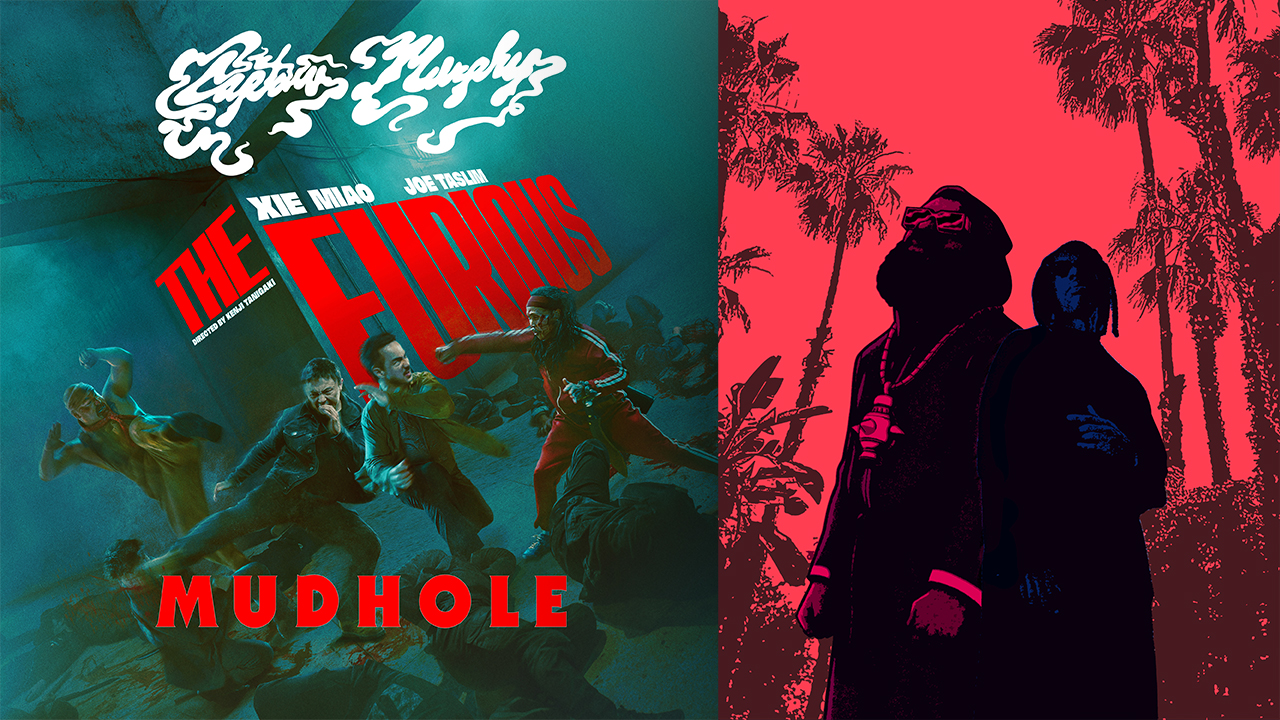
Leading up to the release of “The Furious”, Dorkaholics was invited to speak with American musician and filmmaker Steven Ellison, better known as Flying Lotus. In addition to discussing his experience composing the score for the film, we talked about his upbringing in a musical family, his passion for film and music, as well as his approach to finding the rhythm in filmmaking.
What Made Flying Lotus a Dork Growing Up
When asked about the dork he was growing up, Flying Lotus shared classic fandoms, including video games, “Teenage Mutant Ninja Turtles”, “Ghostbusters” toys, and karate classes inspired by the Heroes in a Half Shell.
“Just loving video games and Ninja Turtles and Ghostbuster toys… and going to karate classes after seeing Ninja Turtles” as he put it.
Growing Up in a Family Filled with Musical Icons
When asked about his experience growing up in a family filled with musical icons like singer-songwriter Marilyn McLeod, jazz pianist Alice Coltrane, and saxophonist John Coltrane. Rather than focusing on fame or industry connections, he emphasized the value of seeing success in creative endeavors firsthand.
“Having examples around you really just helps you build a foundation of belief that it’s possible,” he explained.
He shared that many aspiring artists struggle because their dreams feel abstract, but he was surrounded by people whose careers demonstrated that success was achievable through hard work. Simply put, the greatest barrier isn’t talent but belief. And because he had examples around him, Flying Lotus never had to wonder whether a career was attainable or not.
“I think that’s honestly the biggest divide with a lot of people is just that they don’t think it’s possible,” he stated.
When discussing how he became interested in both film and music, he shared a childhood story about discovering a mysterious box in his grandmother’s closet that was filled with cables and electronics. Two of the items he discovered would end up sparking parallel passions that would define his career as both a filmmaker and musician. It’s also worth noting that while he had always imagined himself working in film, music had started out as something he did purely for fun before it became his profession.
“There was a camcorder and a drum machine in this box, and they’re two things that I fell in love with,” he recalled.
Behind the Score for “The Furious”
With experience on the score for the series “Yasuke” which he was also an executive producer for, as well as other projects, it was only natural to ask about the lessons he has learned along the way as a composer.
“Serve the movie, serve your project.”
He explained that the biggest lesson has been to prioritize the needs of the project over personal artistic ego. Rather than trying to impose his own style onto a film, he believes composers should ask what the scene is trying to communicate and create music that enhances that vision. For “The Furious”, that meant understanding that audiences should leave energized by the film’s action and giving them music that amplified that feeling.
Wanting to know more about the creative process for scoring action films, the conversation moved to how Flying Lotus works with footage to provide the best possible soundtrack. He explained that every well-edited scene contains an inherent rhythm, even before music is added. He would identify that pulse, by often playing the scene alongside a metronome to determine its tempo.
“I’ll turn on a metronome and let the scene play… this scene is this BPM,” he shared. Once he discovers the scene’s BPM, he can build the score around that rhythmic foundation.
“The Furious” and “Mudhole”
Catch “The Furious” in theaters on June 12, 2026. Flying Lotus’s rap alter ego, Captain Murphy, makes a return with the release of “Mudhole”, an original track for the film. The track also features production by Little Snake, FlyLo’s Brainfeeder labelmate.