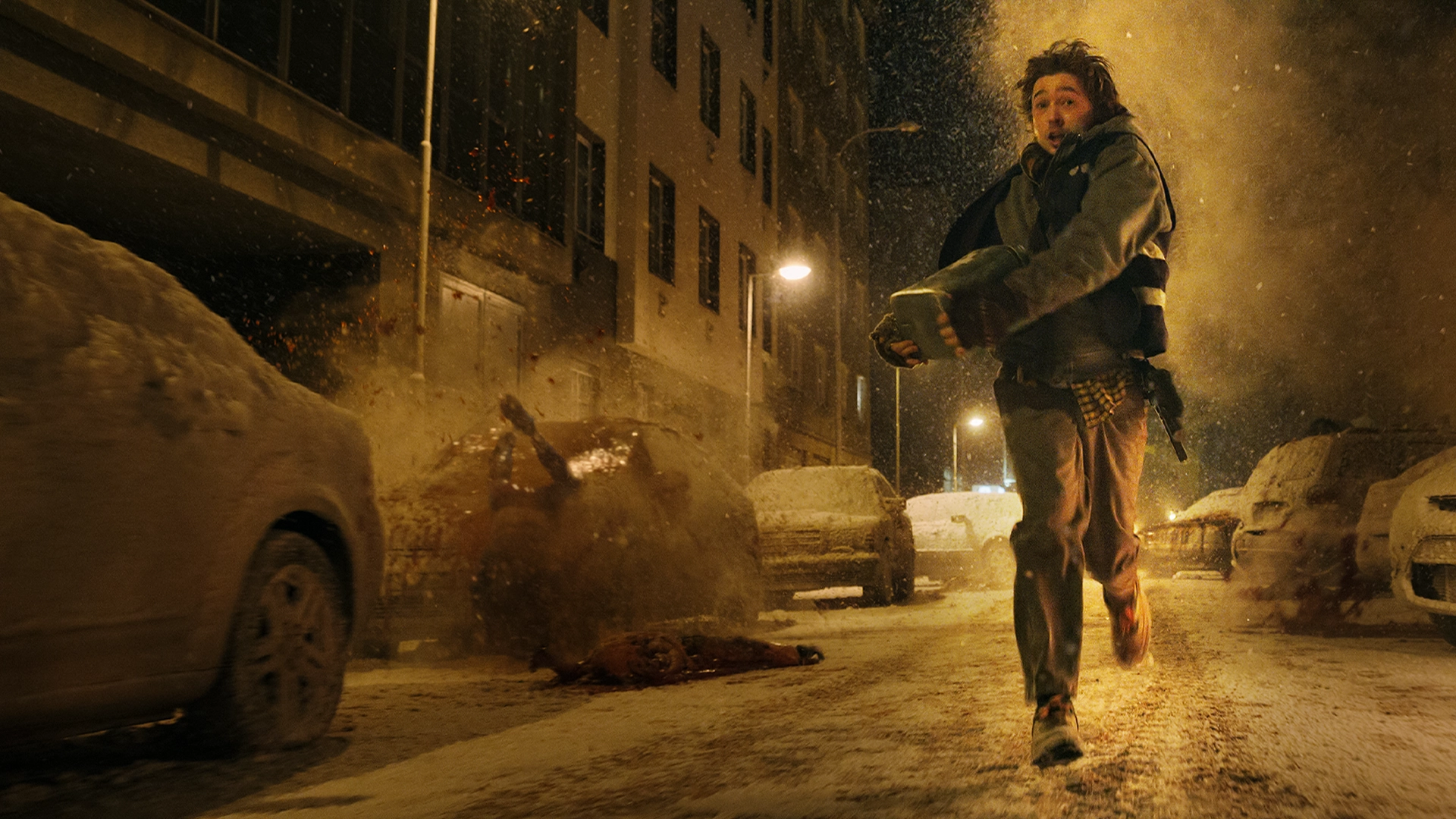
A sealed package. A courier just trying to do his job. And Raccoon City is already falling apart before anyone can explain why. That’s the setup for Sony’s new “Resident Evil,” which drops viewers straight into chaos.
Director Zach Cregger, coming off the high of “Weapons,” brings a tighter, more personal angle to the long-running video game adaptation. This time, the story does not follow familiar heroes. It follows someone who never asked to be part of any of it.
Sony rolled out the first trailer earlier this month, dropping the first look at Raccoon City’s collapse.
Cregger Turns the Franchise in a New Direction
Sony’s “Resident Evil” is based on Capcom’s iconic survival-horror series, but this version departs from legacy characters. The Hollywood Reporter reports that Cregger directs and co-writes with Shay Hatten. Columbia Pictures, Constantin Film, and TriStar Pictures will produce the film.
At CinemaCon, Cregger admitted to being a longtime fan stepping carefully into this world.
“Over the last couple of decades, I have played a shit ton of ‘Resident Evil’,” Cregger said, noting he was drawn to how the games are “so naturally cinematic.”
“If you love the games, you will feel their influence everywhere in the movie,” the director added.
The story follows Bryan, played by Austin Abrams, a medical courier sent into Raccoon City to deliver a package. That job quickly turns into something much worse as an outbreak spreads across the city. The cast also includes Zach Cherry, Kali Reis, and Paul Walter Hauser.
Instead of relying on franchise icons like Leon S. Kennedy or Jill Valentine, the film builds its story around Bryan’s experience. That choice gives the story a more isolated, ground-level perspective.
The film arrives in theaters Sept. 18.
“Resident Evil” Has Been Reinventing Fear for Decades
“Resident Evil” started in 1994 as a Capcom PlayStation game and quickly became one of the defining names in survival horror. It built its reputation on limited resources, tense exploration, and the constant feeling that something was never quite right.
Since then, the franchise has expanded across multiple consoles, remakes, and sequels, including Resident Evil Requiem. It has stayed active for decades by constantly reshaping itself.
The film series has taken a similar path. Earlier adaptations leaned into original stories rather than strict retellings of the game. Some stayed close to the games’ tone. Others pushed further into standalone territory.
This new version continues that pattern, but goes even further by stripping the story down to a single character and a single mission gone wrong.
Across gaming and film, “Resident Evil” keeps returning to the same core ideas: containment breaking down, corporate systems failing, and people trying to survive something they never fully understand.
A Smaller Story Inside a Bigger World
This “Resident Evil” does not try to cover everything the franchise has built over 30 years. It narrows its focus instead. One courier. One city. One night where everything goes wrong at once.
It asks a simple question: what happens when you are not a hero, just someone trying to finish a job when the world stops making sense? How audiences respond to that shift may define how this new chapter in “Resident Evil” is remembered.
Would you rather see ‘Resident Evil’ stick with new characters like Bryan, or return to the originals?